

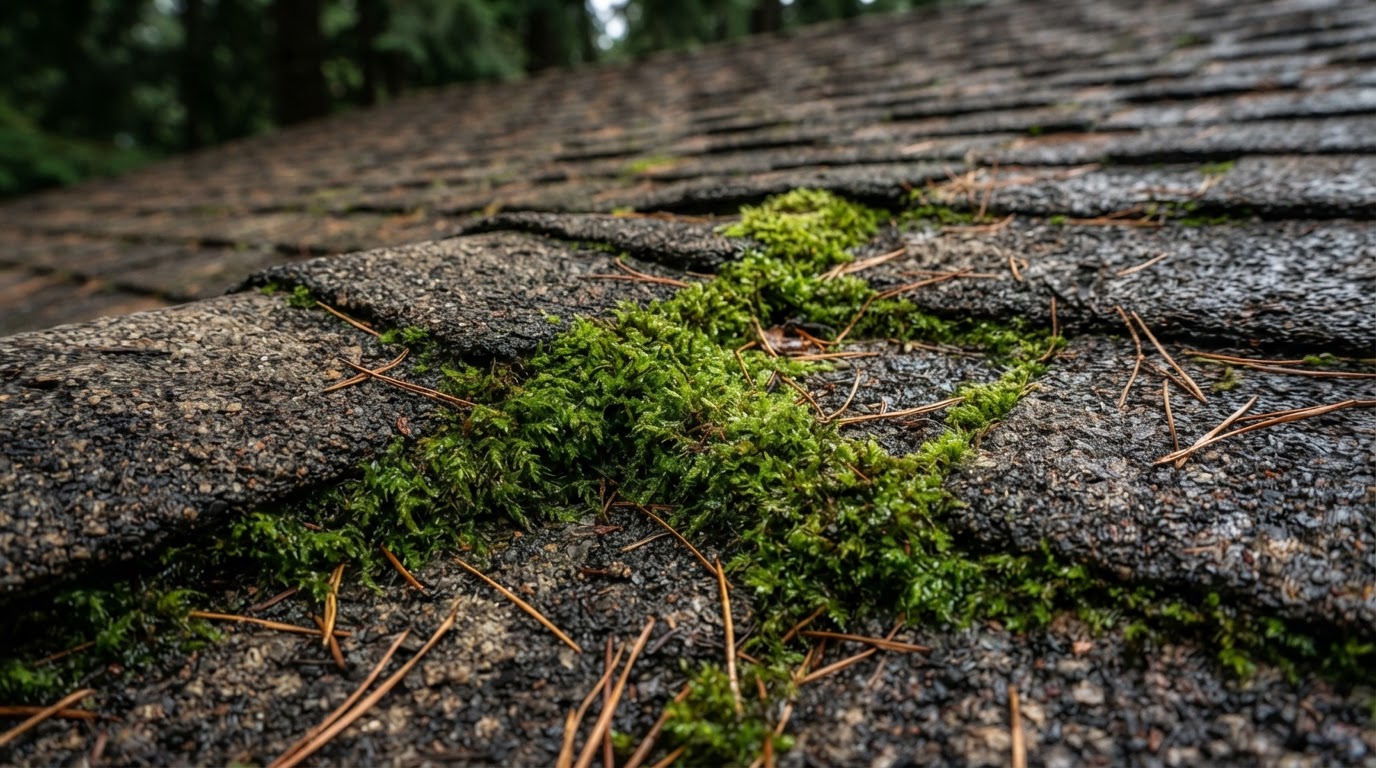
If you live anywhere near Bellevue, Kirkland, or Lake Stevens, you have seen it: a green roof that was never supposed to be green. Moss is so common on Pacific Northwest roofs that many homeowners treat it as decoration. It is not. Moss is the number one thing shortening the life of roofs in our area, and the good news is that it is manageable if you handle it the right way.
Why Moss Loves Pacific Northwest Roofs
Moss needs three things: moisture, shade, and something to feed on. Our climate delivers all three. Months of rain keep roofs damp, evergreen trees shade them through the day, and the layer of pollen, needles, and dust that settles on shingles gives moss a place to start. North-facing slopes get the worst of it because they dry out last after every rain. Once moss spores land and take hold, a colony spreads steadily across the roof, shingle by shingle.
What Moss Actually Does to Your Roof
Moss is not just sitting on your roof, it is working on it. Its root-like structures grow down between and under the shingle edges, physically lifting them. Lifted shingles let wind-driven rain work underneath. The moss itself acts like a sponge, holding water against the roof surface long after the rain stops, which rots the edges of shingles, strips their granules, and can eventually soak into the deck below. In winter, that trapped moisture freezes and expands, prying shingles up further. Left alone for years, moss can take a roof that should have lasted 25 years and finish it in 15.
How to Remove Moss Safely
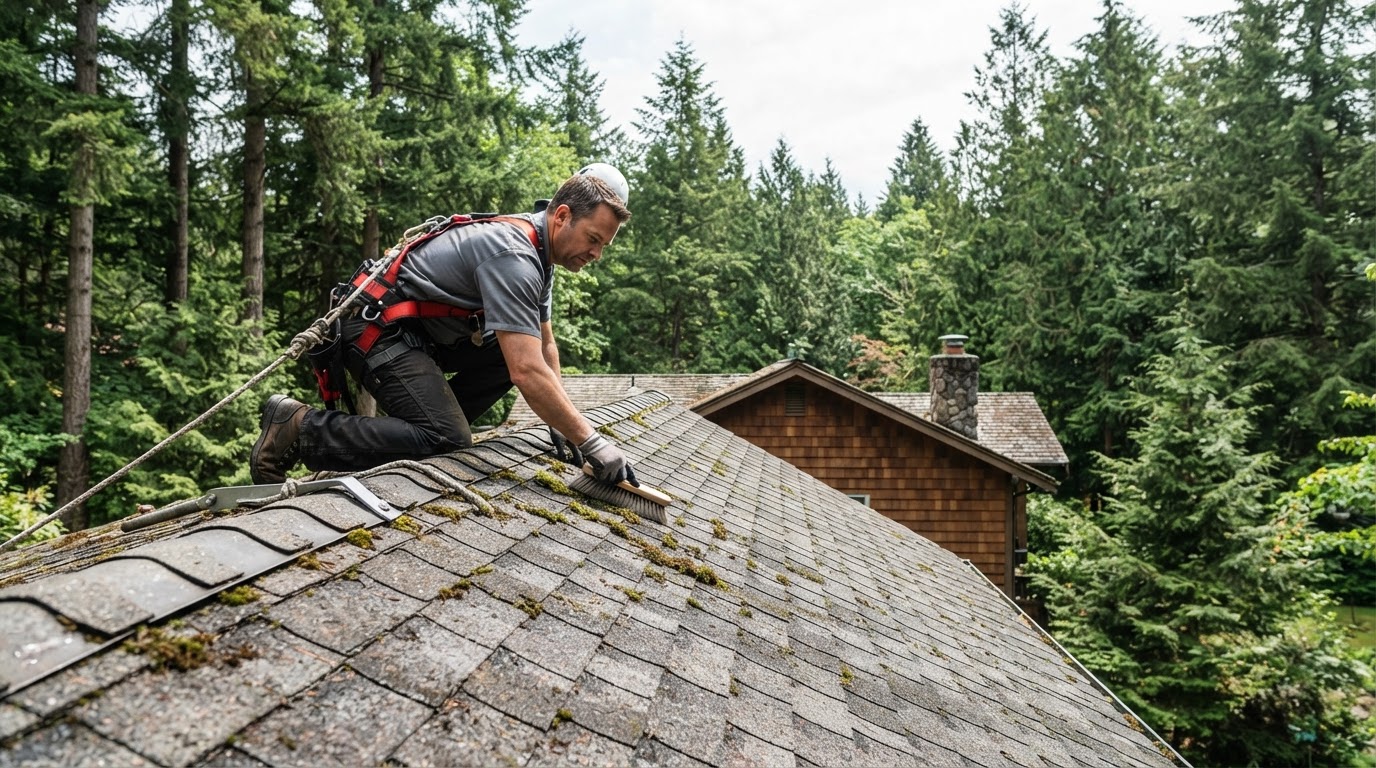
- Start with the loose growth. On a dry day, gently brush moss downward with a soft brush or clear it with a leaf blower. Work from the top of the roof down so you never push debris up under the shingles.
- Treat what is left. Apply a moss treatment made for roofs, following the label directions. The moss dies over the following days and weeks and releases its grip, then washes and brushes away without force.
- Rinse gently if needed, with a regular garden hose from above, never aimed up under the shingles.
- The best time to do this is a dry stretch in late spring or summer, when treatments work fastest and the roof is safest to be on.
Large, steep, or heavily covered roofs are a job for a professional soft wash, which kills the moss at the root without damaging the shingles.
What Never to Do
Never pressure wash a shingle roof. The pressure strips off the granules that protect shingles from the sun, shortens the roof's life on the spot, and can void the manufacturer's warranty. Do not scrape moss off with force either, since dried moss pulls granules and shingle material away with it. And never climb a wet or mossy roof yourself: moss is as slippery as ice, which is why roofers treat it as a safety hazard first and a cleaning job second.
How to Keep Moss Off for Good
- Install zinc or copper strips just below the ridge. Every rain washes metal ions down the slope, and moss cannot establish itself where that water runs. This is the single most effective preventive step.
- Trim back branches that hang over the roof. Sunlight and airflow are moss's enemies, and they cost nothing.
- Keep the roof clear. Blow off leaves and needles a few times a year, especially in valleys and on the north slope, and keep gutters clean so water is not backing up at the edges.
- Treat preventively. A light moss treatment every one to three years, depending on how much shade your roof gets, stops colonies before they ever take hold.
When Moss Means a Bigger Problem
If moss has covered a roof for years, killing it is only step one. The shingles underneath may be curled, soft, or rotted through, and the honest next step is an inspection to see what the moss was hiding. Minor damage can be repaired section by section. Widespread damage means it is time to weigh a replacement, and our repair vs. replacement guide walks through exactly how that decision works.
Frequently Asked Questions
Is moss on a roof just cosmetic?
No. It looks harmless, but moss lifts shingles, traps moisture against the roof, and accelerates rot and granule loss. Roofs in the Seattle area regularly lose five to ten years of life to untreated moss.
How much does professional moss removal cost?
For most single-family homes in the Bellevue and Lake Stevens area, professional moss removal and treatment runs $300 to $800 depending on the roof's size, steepness, and how heavy the growth is. Prevention treatments after that cost less and keep it from coming back.
Will zinc strips really keep moss off my roof?
Yes, they are the most reliable long-term prevention. Rainwater running over the zinc or copper releases ions that moss cannot grow in, protecting the slope below the strip for years with no effort from you.
Can I just let the moss die and leave it?
Dead moss left in place still holds moisture and still sits under shingle edges. It needs to come off once it dies, either by gentle brushing or natural weathering over a few months, and then prevention keeps the cycle from restarting.
Ready to upgrade Your Roof?
Get an honest assessment, clear pricing, and a 5-year workmanship warranty from our expert team.